ITALY
A magical setting in the Italian hills, away from the crowds of Tuscany
There may be affiliate links within this post which provide me with a commission, at no cost to you. This is a way to help me to provide valuable content. More information at: Privacy & Disclosure.
High in the hills of central Italy pretty stone villas dot a landscape of olive trees and grapevines. These “Umbria Agriturismo” are centuries-old farms which also welcome guests, ideal for tourists who want a more intimate experience of Italy’s delicious food culture.
“Agriturismo” comes from the Italian words for agriculture and tourism, and the combining of the two. As we drove up through Umbria’s green hills I admired villas that appeared to have been beautifully maintained for centuries. This was not necessarily the case. Many of these properties were abandoned in the 1950s and 1960s when small-scale farming became difficult and people moved to cities for work.
History of the Agriturismo in Umbria
With an increase in tourism in the 1970s, the Italian government made “agriturismo” an official designation, and provided incentives for Italians to return to the countryside, to farming, and to restore the abandoned properties. The designation also enabled owners to supplement their income by hosting tourists. Agriturismo are found all over Italy, in particular Umbria, Tuscany and Puglia.
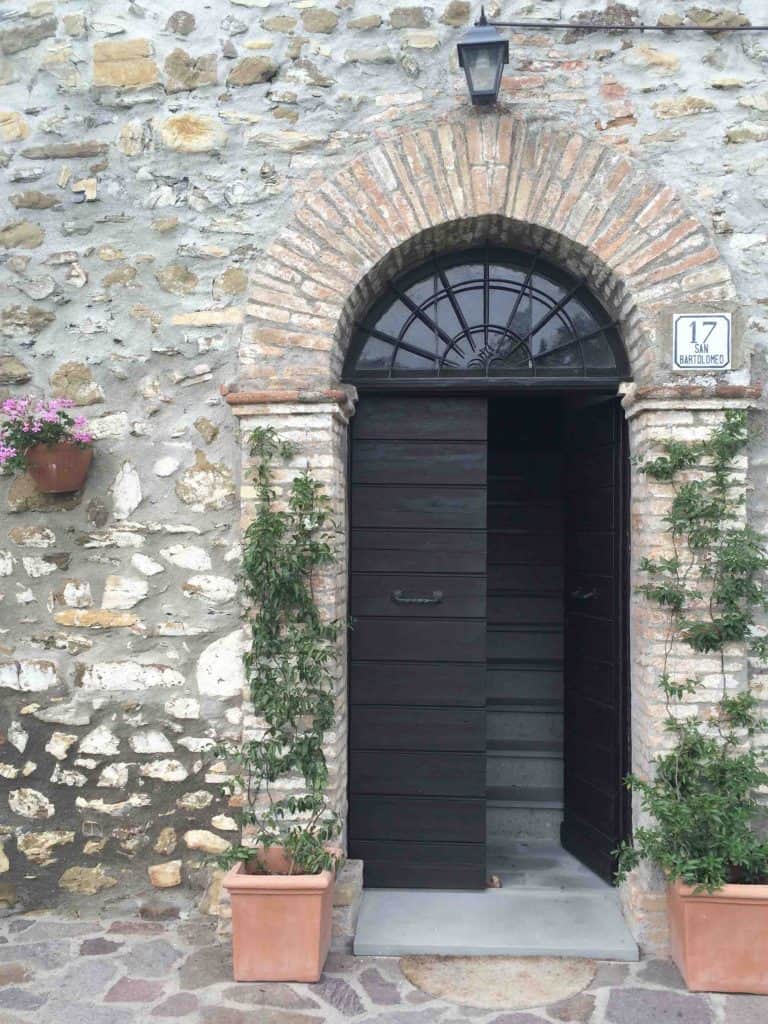
We had been to Italy previously but this was our first visit to Umbria. I had booked a stay at a small agriturismo called Antica Olivaia, a 17th-century farmhouse which was carefully restored by its owners, Marco and Daniela.
Why Consider Umbria?
- Fewer crowds and more affordable than nearby Tuscany
- Close Proximity to Rome makes it a great add-on
- Umbria’s compact size makes it easy to explore
- Delicious cuisine connected to culinary traditions
- Some of Italy's best hilltop towns: Orvieto, Assisi, Spello, Todi
- Etruscan and Roman history, with archaeological sites to explore
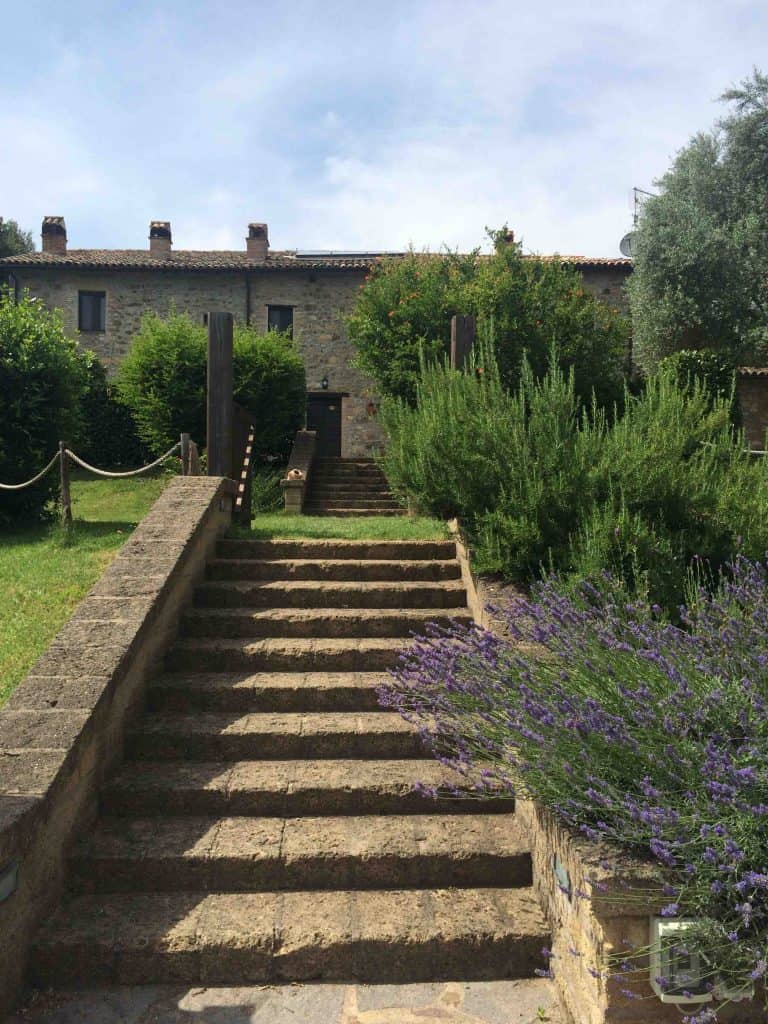
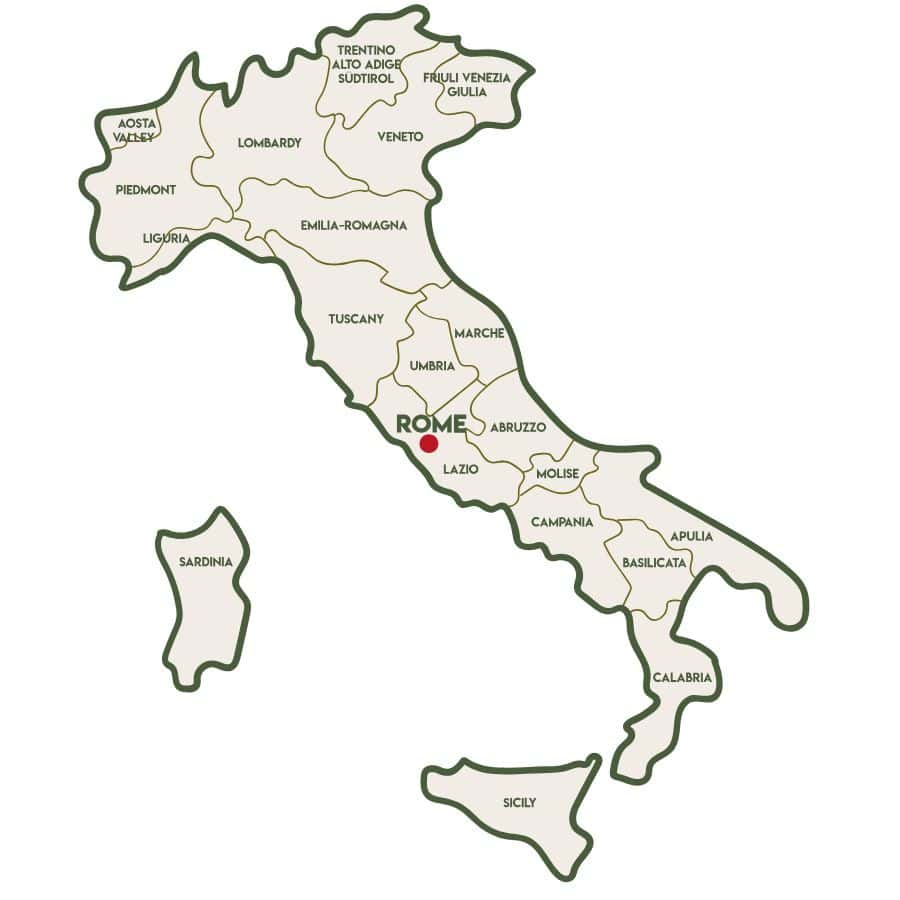
Antica Olivaia is located at the intersection of three of Italy’s most beautiful regions—Lazio, Tuscany, and Umbria. Umbria is known as the green heart of Italy because of its beautiful green hills; it is more forested than nearby Tuscany. I loved Tuscany, and we did consider returning, but Tuscany is much more crowded and typically more expensive. Plus, we wanted to try somewhere new and Umbria is quite close to Rome, where we were coming from.
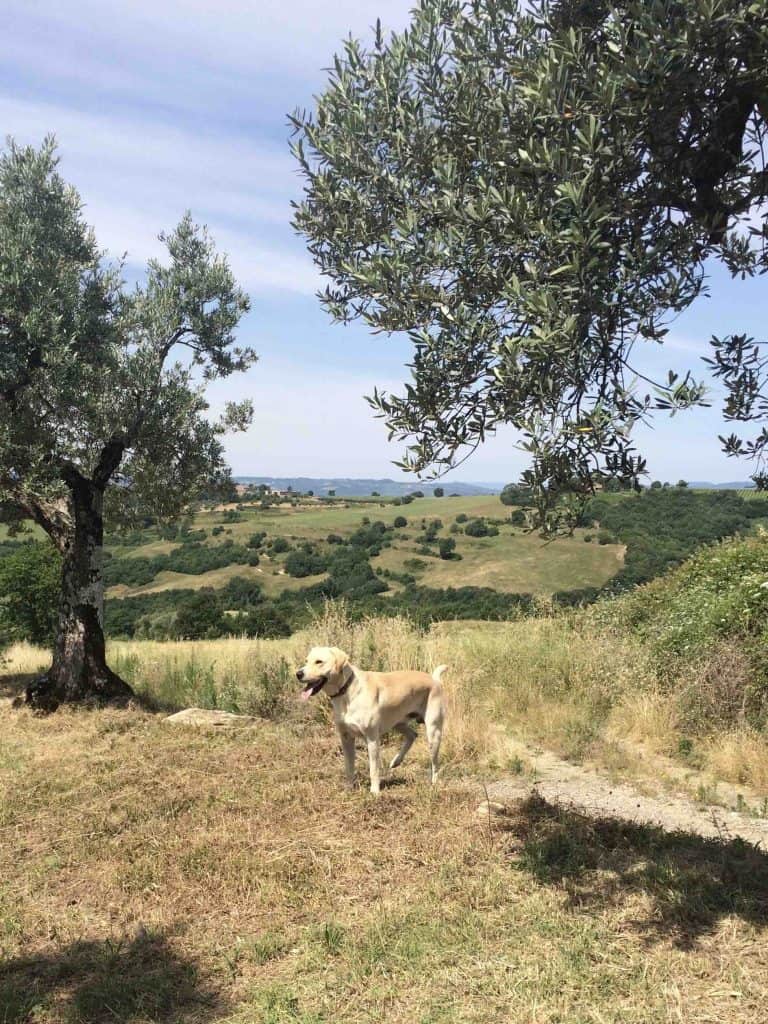
We arrived at Antica, met Daniela and Marco and ventured out to see the olive grove, accompanied by Miles, the resident dog.
Antica Olivaia (which translates to ancient olive grove) has approximately 700 olive trees spread out over four hectares, many of them more than a century old.
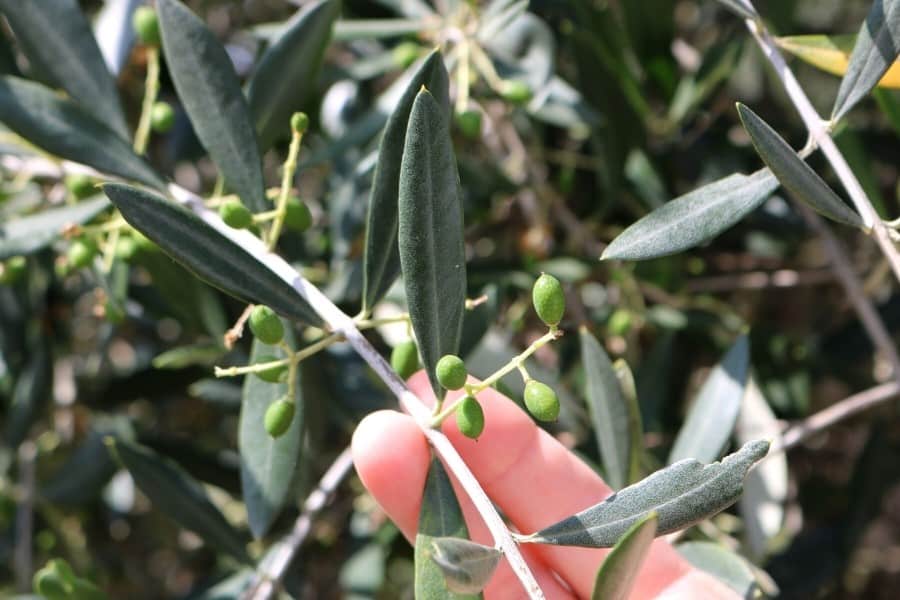
The olives were tiny and hard, little pebble-like clusters. It was June; they wouldn’t be harvested until late October. They would be cold-pressed nearby and the resulting extra virgin olive oil is considered among the best in the area and is produced entirely without pesticides.
Dinner al Fresco
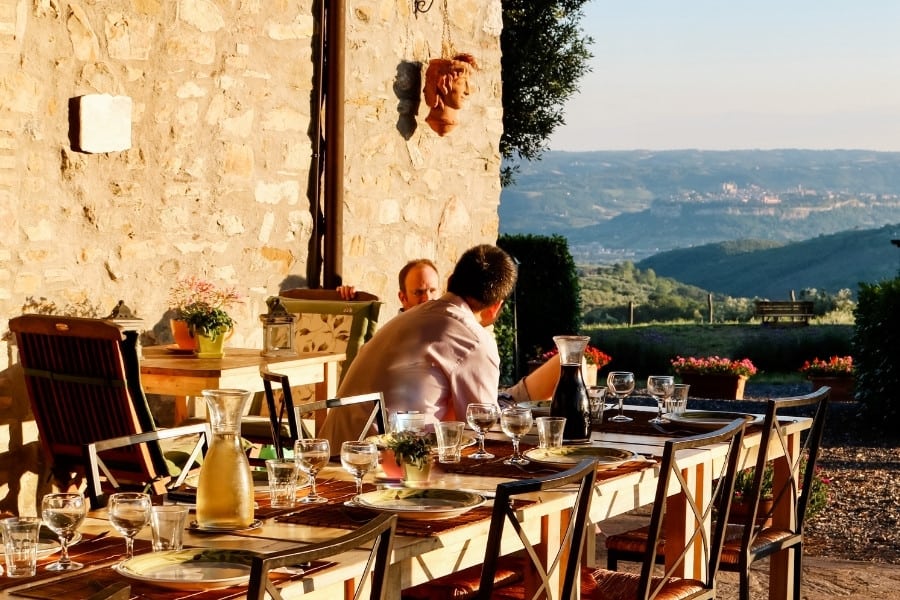
Dinner is served al fresco (in the open air) at Antica Olivaia, with all the guests together at one long table. Daniela was setting the table as Marco finished preparing dinner. She told us about discovering the property after a challenging year-long search. It was partly restored but needed a lot of work she said. That didn’t deter them. The view was too perfect. They immediately gave up their jobs in Rome, moved to Umbria and began the restoration.
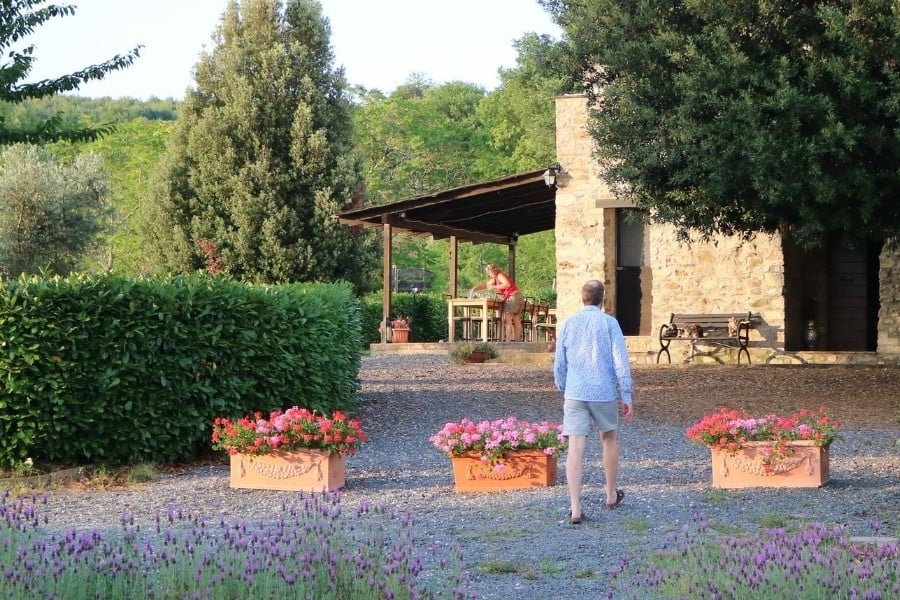
Antica Olivaia has six guest rooms and there was one other family staying on our first night. We gathered to enjoy a glass of Orvieto Classico before dinner. The sun sank into the Umbrian hills, its golden light shining down the long wood table. Marco had set out bowls of olive oil. The benefit of staying at an agriturismo is the chance to sample what is grown on the farm; in this case olive oil. I was excited to try olive oil that came from the trees I could see from our table.
Green-gold puddles shimmered with the reflection of the setting sun, and awaited crusty bread. The children ran around the garden with Miles, and we sipped wine. The bread arrived and we called them to join us.
Olive Oil Tasting at our Umbria Agriturismo
I dipped a chunk of bread into the oil and popped the whole thing into my mouth. It was slightly peppery but somehow light as well. And very smooth—none of the bitter aftertaste that some olive oils have. Marco said that the flavor can change, depending on the harvest. It was the most delicious olive oil I had tasted and I asked him about purchasing some to take home. He looked hesitant and said he would check if he had enough left to sell. He couldn’t promise.
Dinner was a fixed four-course meal of regional specialties served with more wine: Orvieto Classico and Sangiovese. We were told that nothing we were eating had traveled more than one kilometer to reach our plates. It is another benefit of staying at an Umbria Agriturismo—the food is outstanding and typically less expensive than at restaurants in Italy. A simple spaghetti was on offer for the kids.
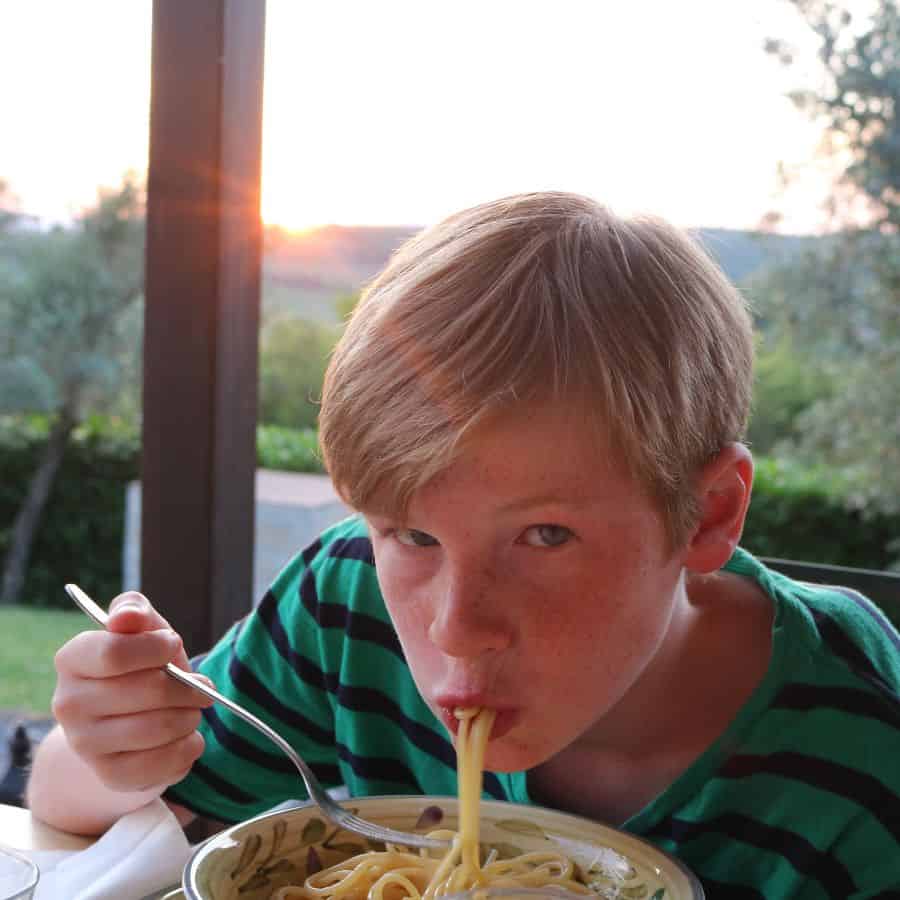
Local specialties in this region include Ombrichelli a thick spaghetti-like pasta, made with flour and water. It was cooked to a perfect point, where tender meets al dente, and served with local black truffles, porcini mushrooms, and salty pecorino.
Over dinner, we shared stories of our travels with the other family visiting from California. We spoke of our love for Italy and the places we had seen, on this trip and others.
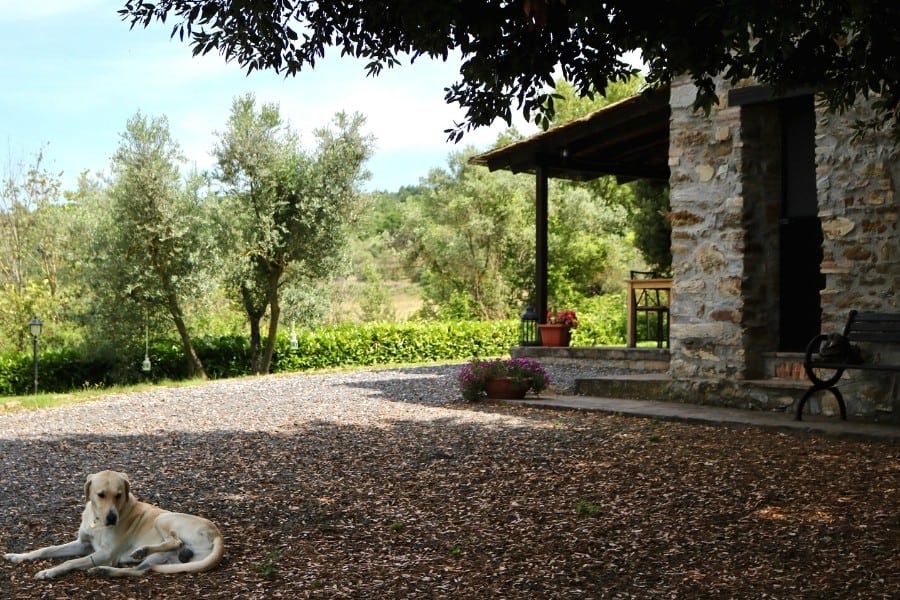
Accommodation at an Umbria Agriturismo
Agriturismi (yes, that’s the plural) can vary greatly in style and amenities. They can be very rustic and simple, such as a true farmhouse that will rent out a room. Or they can be luxurious villas and come with the amenities you would find at a fancy resort. Antica Olivaia was the perfect compromise between the two.
The house which dates to the 1600s had retained its charm through several restorations—it has beautiful tile floors and striking wood beams from the original farmhouse. The guest rooms were simple but very comfortable, and we appreciated that they did not have televisions.
It is nicely set up for families with children, or groups. There are two rooms that can accommodate four, with a double and two twins. Another two rooms can sleep three.
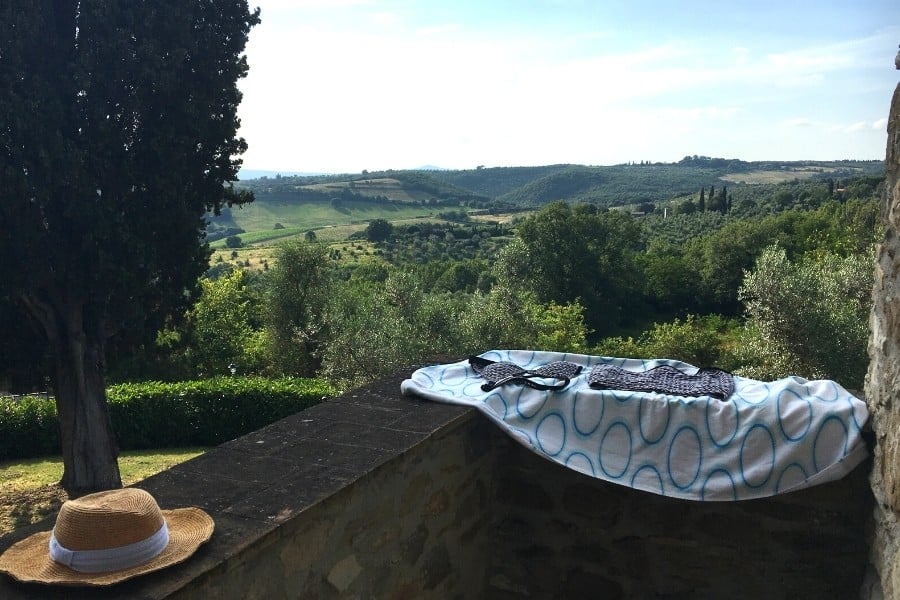
We had a pretty balcony off of our room on the second floor. I went out to set my swimsuit to dry and glanced to the west. Rolling hills m vineyards and Cypress trees—a quintessential Italian landscape. There’s really nothing quite like it.
Breakfast was served al fresco as well and brought the chance to try a specialty bread called Lumachelle, which resembles a snail and is made in the nearby town of Orvieto. Fruit and yogurt, tea, and coffee were also served, and Marco makes espresso or cappuccinos upon request.
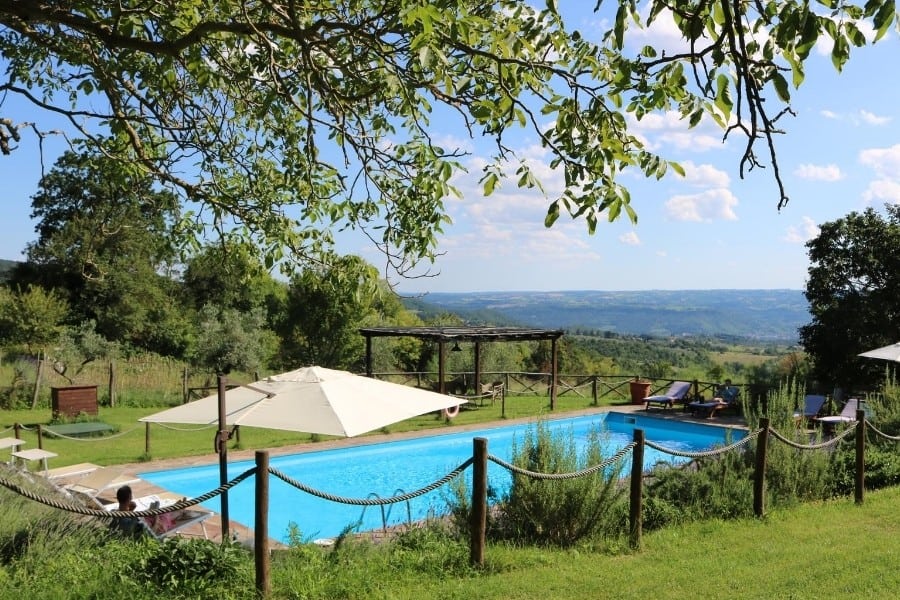
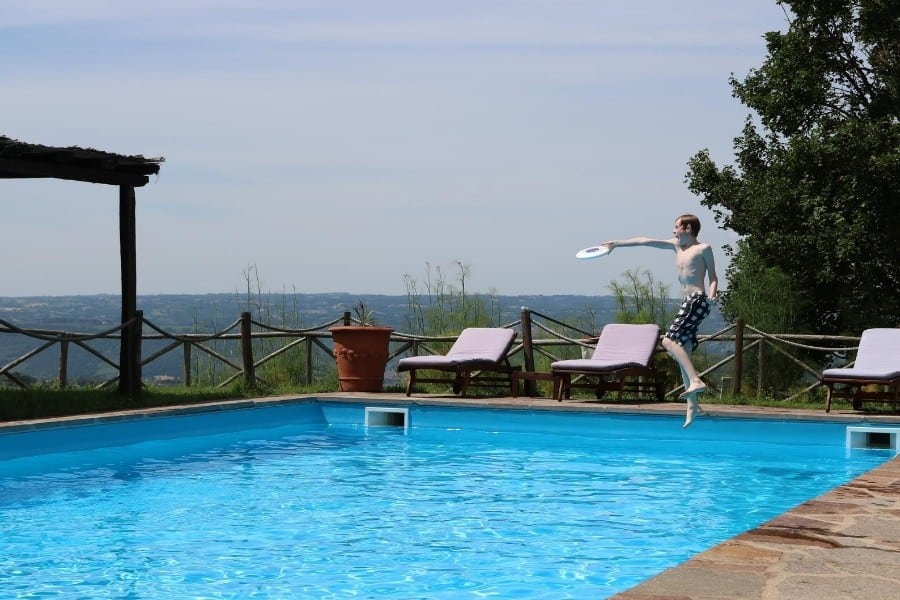
Antica Olivaia’s swimming pool was a highlight for all of us. We had just come from Rome where the days were scorching hot in late June. The pool was bordered by enormous lavender bushes on one side, and alive with more honeybees than I had ever seen.
I positioned myself so I could watch our boys play “water frisbee” and enjoyed the view of the hills and Orvieto, the hill town which we planned to visit during our stay.
Under the Umbrian Sun - A Villa Beckons
We decided to explore a little bit and set out down the road we had driven in on. From so high on the hill we admired the medieval towns in the distance.
A breeze blew through the olive trees and I marveled to think how long they’d stood on this hill. Ahead to our right we spotted a villa, sitting quietly among the trees. As we got closer it was clear that no one lived here. The windows were boarded up and the mossy roof sagged. A low building next to the farmhouse was covered in vines and beginning to crumble. And the view out over the Umbrian hills was sublime.
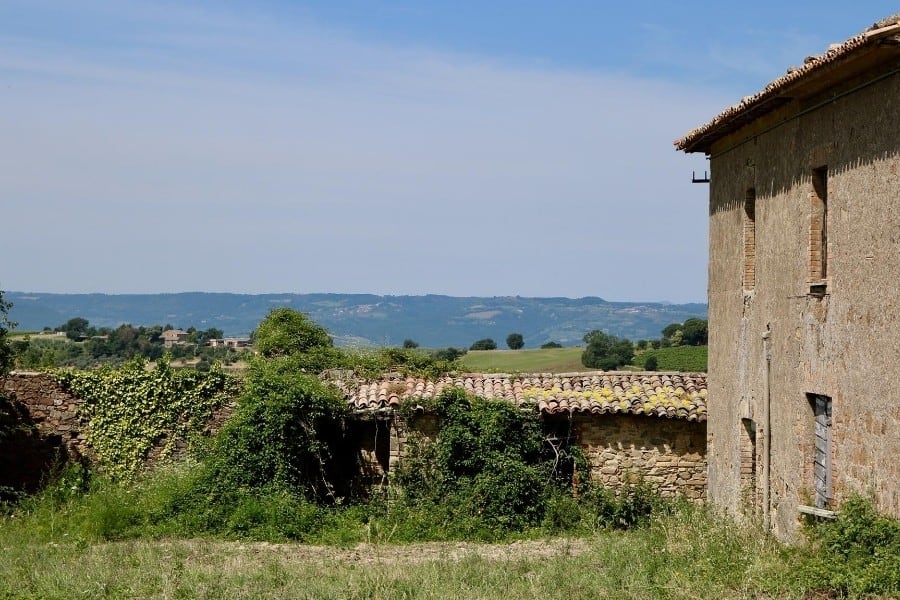
We walked around the buildings wondering when anyone was last here. I also wondered if it was for sale. “We should buy this villa, and restore it,” I said. I think I just wanted to hear myself say something so obviously outrageous and yet… I was already imagining what it could become: Where I would enjoy my morning coffee, gazing out over the hills, where I would write, where we would eat lunch with a glass of Sangiovese. My husband, Sean laughed, but in a way that suggested maybe the idea wasn’t entirely outrageous. Was he was sharing my fantastical moment? That would be unusual; he is the practical one.
Maybe we should buy this villa, and restore it
We live and work in the U.S.; we have young-adult children and a dog. And we don’t speak Italian. Yet we gazed longingly at the decaying villa in some sort of a “La Dolce Vita” trance.
I have found that Umbria, all of Italy really, is like that. It casts a spell on you, so that practical concerns are set aside. Like when a jug of house wine is set before you at lunch. It’s Italy – of course we drink wine with lunch. We stood a while enjoying the view over green hills crowned with ancient towns, the little farms dotted among them. Sean and I exchanged a glance and laughed; we were imagining buying a crumbling villa, the restoration of which would surely mean considerable wine drinking.
Umbria - What to See and Do
Hill Towns of Umbria
Antica Olivaia is perfectly postioned to explore several of Umbria’s most beautiful hill towns, including Orvieto, Civita di Bagnoregio, Bolsena, Todi and Città della Pieve. A little further afield are Perugia, the Umbrian capital, Spoleto, and Assisi.
Orvieto is the closest town, and is known for its stunning cathedral. We set off to explore the city and stay for dinner; Marco was taking the evening off from cooking. (They typically serve dinner at Antica Olivaia four nights a week.)
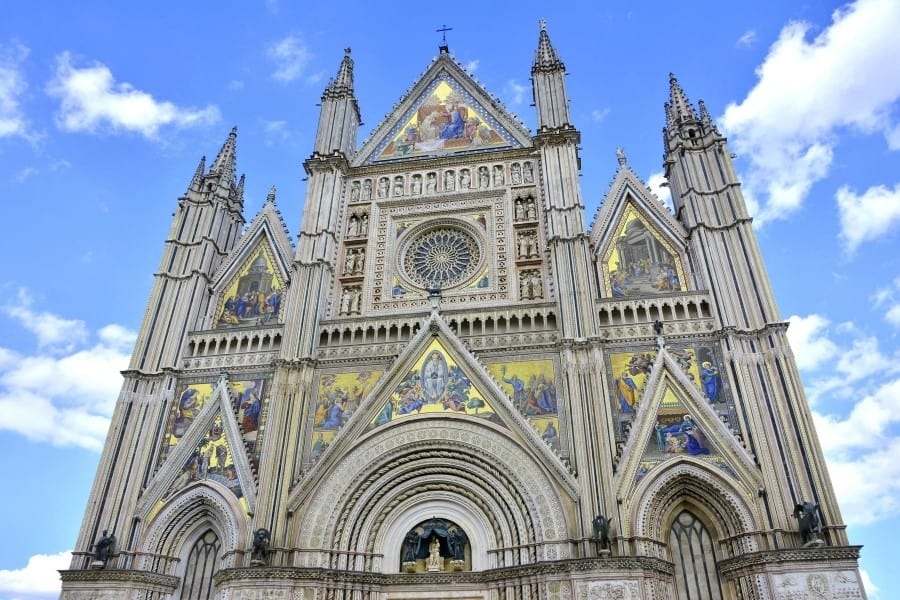
Orvieto
Orvieto is a medieval walled city, like many in Italy, and is best known for its beautiful gothic cathedral, Duomo di Orvieto, one of the jewels of the region.
It was even more stunning than the photos I had seen. Even the kids were impressed by the colorful facade; that was saying something after all the churches we had already seen. We explored more of the city, wandering its narrow winding streets and open piazzas. What is unique here is what we couldn’t see—underneath the cobblestones was a sprawling and hidden network of Etruscan-era caves, wells, and tunnels.
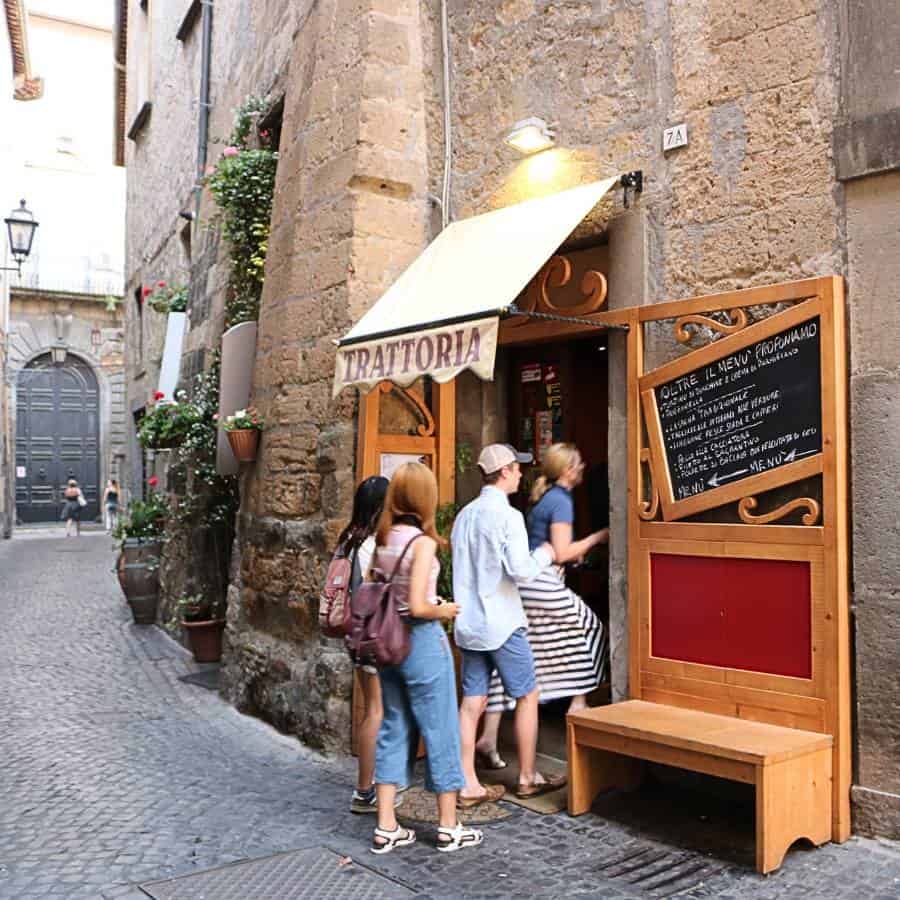
We enjoyed dinner at a place Daniela had recommended. It was a beautiful restaurant and the white tablecloths felt rather fancy after our al fresco evenings in the garden at Antica. We all tried dishes we had never heard of and the food was exceptional.
In late June, we had just missed the goose festival held in Orvieto. Festivals, mostly related to food, are ongoing throughout the year at various Umbrian hill towns.
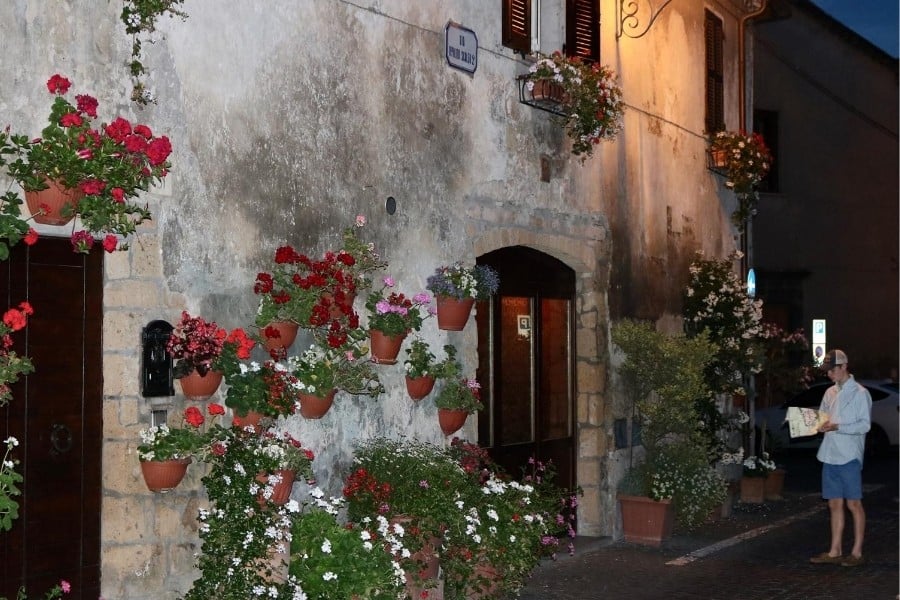
The only glitch in Orvieto occurred when we managed to get lost in the winding streets, which looked different after dark. Sean and I told the boys about the time we spent hours trying to find our car in the Tuscan city of Arezzo, because we knew we had parked just outside of the medieval entrance gate… except there are many medieval entrance gates into the city, and they all look alike.
My son Charles took up the challenge; he consulted the map we had with us and managed to figure out how to exit the maze of streets and return to our car.
Book a Day Trip from Rome to Orvieto
CHECK AVAILABILITYCivita di Bagnoregio
Our next destination was the intriguing hill town, Civita di Bagnoregio, known as “the dying city” due to the slow erosion of the plateau which it’s built upon. It is much smaller than Orvieto and apparently there are less than 20 full-time residents remaining. It is mostly a place for tourists and the people who work here depart at night.
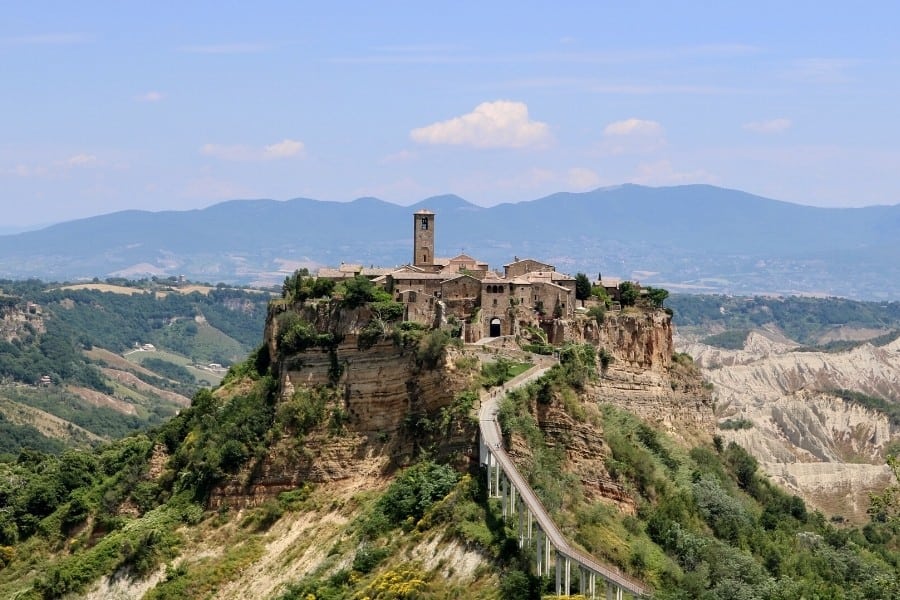
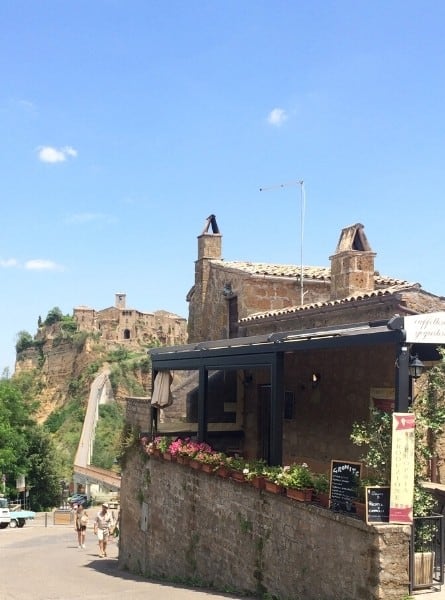
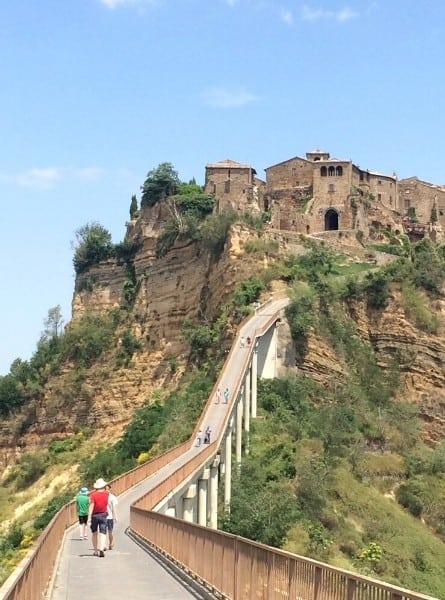
Like Orvieto, it was founded by the Etruscans around 2500 years ago. It once had multiple gates, but now a single long footbridge is the only way in or out. No cars are permitted; you must park outside of the city and then cross by moped or on foot, as we did.
We were told you can also ride a donkey however they must have had the day off because we didn’t see any. There are donkey races which take place here a couple of times each year.
There are day trips from Rome to Civita di Bagnoregio, such as this private day trip.
Lake Bolsena
There is lots to explore near Antica Olivaia; even the local grocery store felt like an adventure when we stopped in to buy food for a picnic lunch.
Nearby Lake Bolsena is the largest volcanic lake in Europe and is known for wonderful swimming and sandy beaches, so we suggested it to the boys, for our last afternoon in Umbria. But a lake swim was not enough of a draw and they asked to stay at Antica instead. (We are from Ontario, Canada so they have lots of chances to swim in lakes.) I was secretly thrilled to park myself poolside on our last day. The boys swam and played, while Sean and I enjoyed cold Orvieto Classico, a last hurrah of Italian vino.
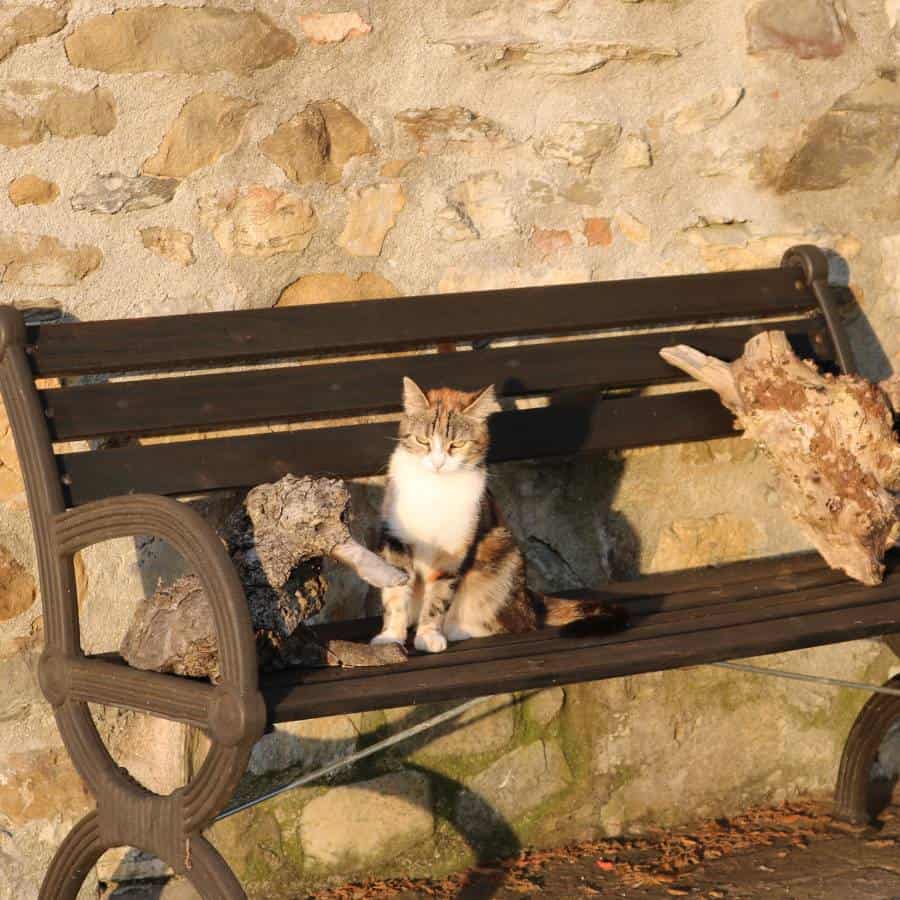
The next morning, Miles the dog joined Daniela and Marco when they came to say goodbye. We thanked them for a truly magical stay, evicted a cat who had jumped into our car, and pulled onto the narrow road.
I felt wistful as we drove past the abandoned villa; I was still under Italy’s spell. We would leave Italy that afternoon and owning an Umbria Agriturismo was a dream that would have to wait.
I shifted my tote bag between my feet and smiled; a liter of Marco’s olive oil was carefully packaged inside. We would have to carry it around on our final few days in Europe — a visit with friends in Geneva. It was a small price to pay. Once home, a taste of the Umbria Agriturismo olive oil would bring us back to dinner al fresco and a view over the Umbrian Hills, just up the road from a villa waiting for the right visitors to fall under the spell of La Dolce Vita.
Umbria Vacation Tips
How to Get to Umbria
Umbria is in central Italy, and the Umbrian capital of Perugia is about 170 kilometers from Rome. You will need a car to explore Umbria and can either rent one in Rome, or pick up a car in Umbria, as we did.
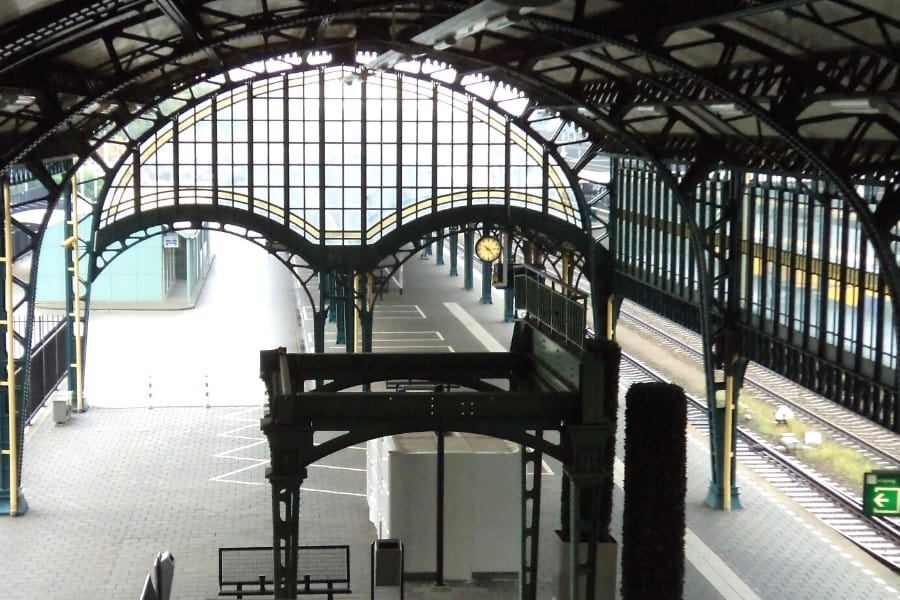
We chose to travel to Umbria by train. From the Rome Termini Train Station, it is a 1.5-hour trip to Orvieto. We rented from Hertz in Orvieto, the only car rental available near the train station.
Note that manual transmission cars are more common in Europe, so if you want an automatic car, specify your preference when you reserve, and call ahead to make sure you are getting what you’ve requested. Smaller rental places such as Orvieto don’t always have them.
Finding an Umbria Agriturismo
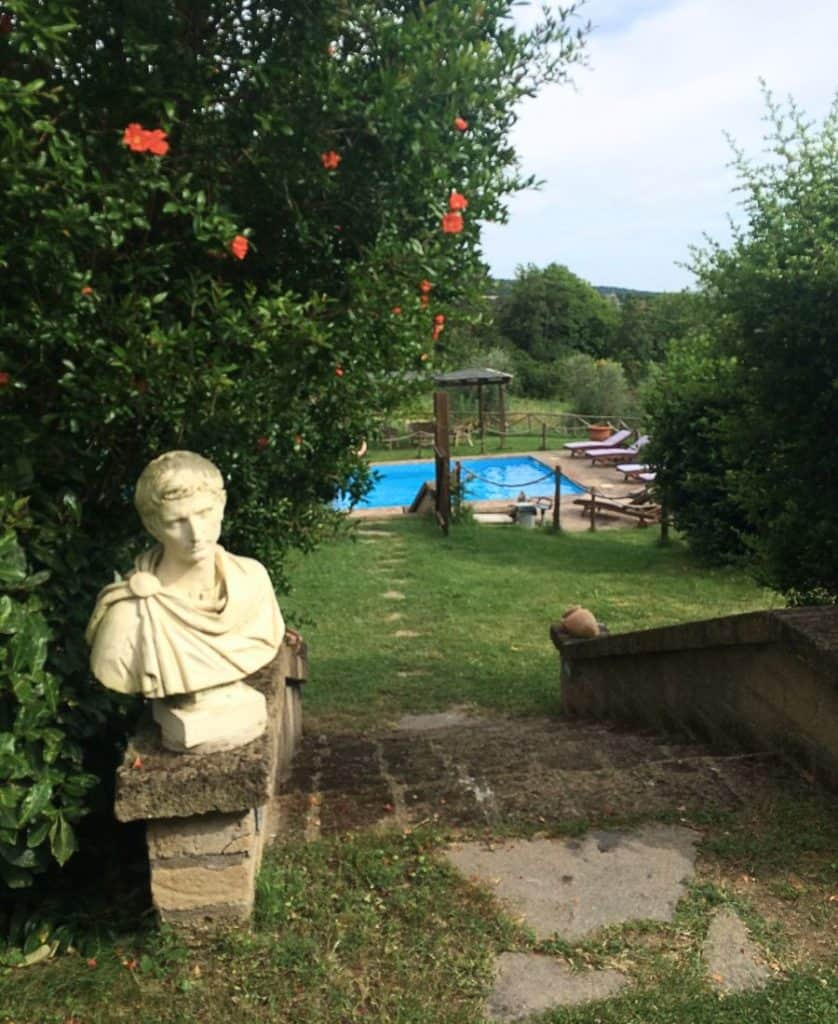
I highly recommend Antica Olivaia. With only six rooms it would be great fun to rent the entire place with other families, or a group of friends. And it is very affordable compared to other places we have stayed in Italy.
If you are planning a trip to another part of Italy, you can find listings of Agriturismi in every region at the website Agriturismo Italy.
Join Midlife Globetrotter
If you enjoyed this story, please subscribe. You'll receive the monthly Midlife Globetrotter newsletter with more Europe travel ideas, tours for women, hotel reviews and Susan's travel stories and updates.
SubscribeMore Europe Travel!